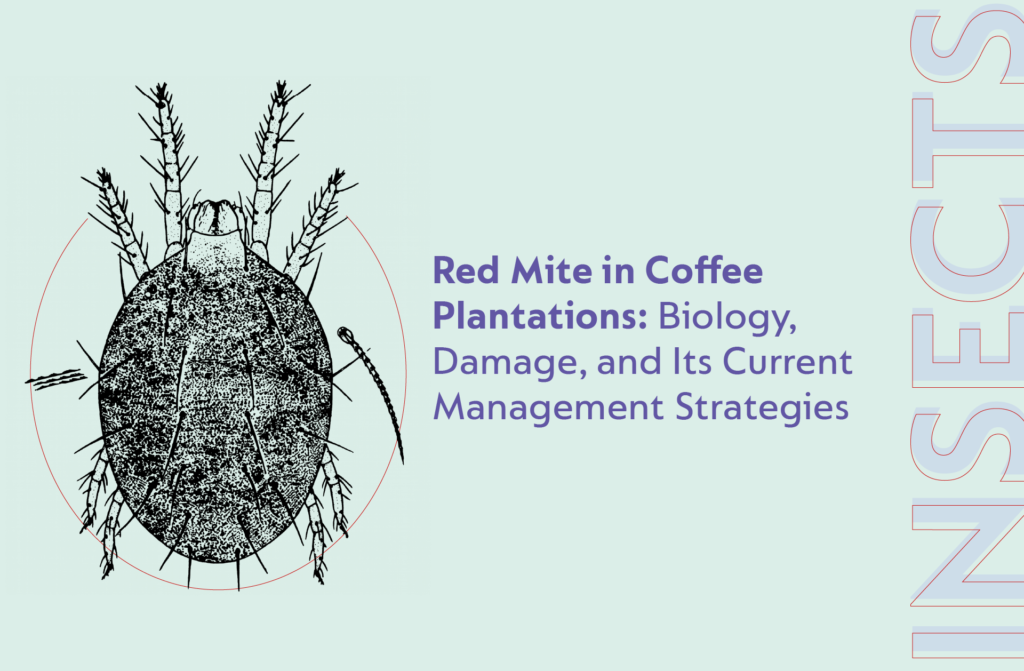
Red Mite in Coffee Plantations: Biology, Damage, and Its Current Management Strategies (359)
Current Status
Not Enrolled
Enroll in this course to get access
Price
Closed
Get Started
This course is currently closed
Welcome to the course “Red Mite in Coffee Plantations: Biology, Damage, and Its Current Management Strategies”. This course is tailored for agronomists and technical advisors, providing a science-based foundation for adopting sustainable, ecology-centered pest management practices. Our goal is to shift from reactive chemical dependency to a durable, resilient management model that mitigates the impacts of Oligonychus ilicis and O. yothersi.
As synthesized in the Menetios Project’s State of Art Report, red mites have emerged as a primary threat to both Arabica and Conilon coffee. Their outbreaks are driven by a triad of environmental and management factors:
Environmental Catalysts: Outbreaks are strongly linked to drought, high temperatures, and excessive dust accumulation on the canopy, which weakens plant resistance.
Ecological Disruption: The misuse of broad-spectrum pesticides—specifically pyrethroids—is a major driver. These chemicals not only suppress indigenous predatory mite populations but can also induce hormesis, stimulating higher reproductive rates in the pest.
Physiological Impact: The damage is extensive. Severe infestations can reduce photosynthetic capacity by up to 50–70% and lower yields by as much as 65%, creating long-term productivity deficits.
The management challenge is to move away from “kill-on-sight” tactics and address the ecological drivers that maintain system stability.
Transitioning to a regenerative coffee system requires an ecologically grounded, integrated approach:
Suppress: Implement precision interventions that prioritize system health. This includes the early detection of localized infestation foci, the use of silicon-based resistance inducers, and the strategic adoption of intercropping to strengthen plant defenses and interrupt pest cycles.
Promote: Leverage the natural regulation provided by diverse predatory mite communities—specifically Amblyseius herbicolus, Euseius alatus, Iphiseiodes zuluagai, and Agistemus brasiliensis. Field and greenhouse trials confirm that augmentative releases of A. herbicolus and E. alatus are highly effective, with mite populations declining by ~16.8% per incremental predator increase.
By prioritizing predator conservation and landscape-level biodiversity, we can replace chemical-heavy practices with self-regulating, resilient strategies.
By completing this course, you will be able to:
Diagnose and Monitor: Identify red mite outbreak drivers (drought, dust, pesticide-induced disruption) and utilize monitoring tools to detect localized infestation foci before they reach economic thresholds.
Implement Targeted Control: Apply strategies that combine the augmentation of predatory mites with non-chemical suppression pathways, such as silicon-based treatments and habitat diversification.
Design Sustainable Plans: Develop site-specific management plans for Arabica and Conilon coffee that prioritize ecological conservation, minimize the use of broad-spectrum pesticides, and maximize the efficiency of natural enemy communities.
Through this training, you will gain the expertise to transform the management of red mites from a persistent threat into a manageable, sustainable component of your coffee production system.
Important: This course includes mandatory interactive activities. You must review 100% of the available resources and content for the system to mark the course as completed.