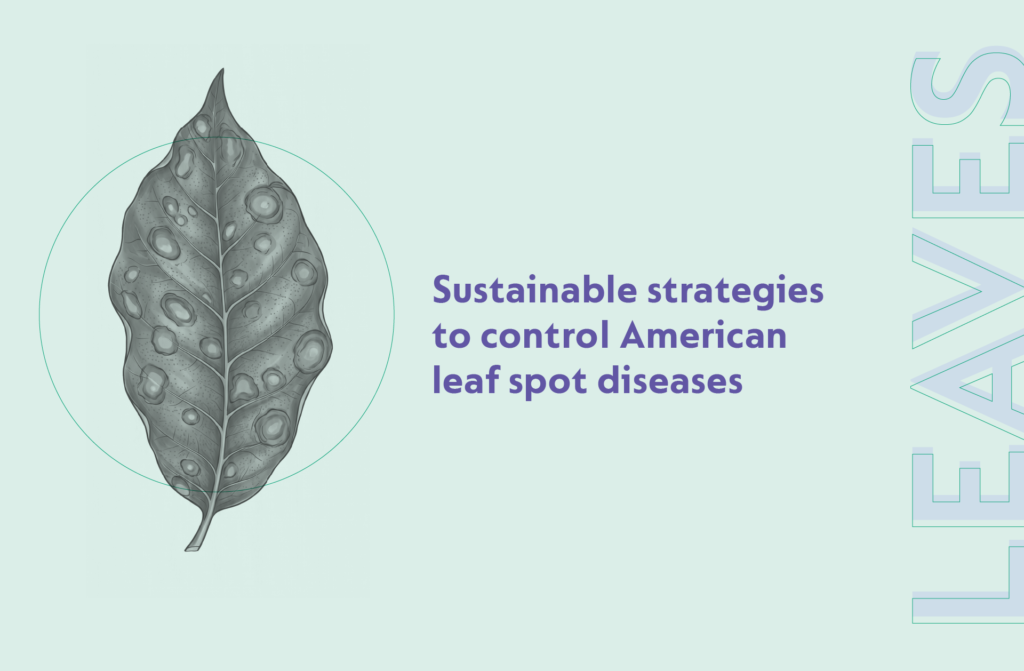
Sustainable strategies to control American leaf spot diseases (360)
Current Status
Not Enrolled
Enroll in this course to get access
Price
Closed
Get Started
This course is currently closed
Welcome to the course ‘Sustainable Strategies to Control American Leaf Spot (Mycena citricolor) in Coffee Plantations.’ This program is designed for agronomists, technical advisors, and producers who aim to overcome phytosanitary challenges through a scientific, ecology-centered approach.
American Leaf Spot Disease (ALSD), caused by M. citricolor, remains a major constraint to coffee production in Central America, particularly in the cold, humid, high-elevation landscapes where the pathogen thrives. The literature consistently shows that ALSD risk is strongly shaped by topography, shade, and microclimate, with elevations between 1,100–1,550 m, dense shade, and prolonged leaf wetness driving the most severe epidemics. Crop management practices such as pruning, shade regulation, and row spacing modify these microclimates and can either amplify or reduce disease intensity, highlighting the need for site-specific, agroecological strategies.
A range of management tools exists, from traditional fungicides to emerging biological and digital approaches. Systemic fungicides remain the most reliable field intervention, while Trichoderma spp. and endophytic fungi offer promising biological alternatives, though their efficacy has been validated only in laboratory or greenhouse settings. Advances in machine learning and image-based diagnostics demonstrate strong potential for early ALSD detection, providing scalable tools for smallholder systems where expert monitoring is limited.
Despite this progress, key research gaps persist. Much of ALSD knowledge is based on correlational field surveys rather than controlled experiments, and varietal resistance to ALSD is poorly characterized, even as rust-resistant cultivars become more widely adopted. Biological control strategies lack field validation, essential oils remain untested on ALSD, and digital detection tools have not been evaluated across Costa Rican conditions. No integrated trials combine shade management, biological control, and optimized fungicide rotation.
Addressing these gaps is critical for developing sustainable, climate-resilient management strategies that reduce dependency on high-risk fungicides while supporting coffee productivity in vulnerable regions.
Upon completion of this course, you will be able to:
Diagnose and Evaluate: Accurately identify ALSD symptoms and evaluate the topographic and microclimatic factors that condition disease severity in different plots.
Optimize Cultural Management: Design and execute canopy modification and shade management strategies that improve airflow within the plantation, reducing fungal infection pressure.
Develop Integrated Plans: Integrate early detection tools, biocontrol (including promising fungal agents), and strategic fungicide use to create a low-risk, scalable, and resilient management plan.
This program will provide you with the necessary tools to transform the management of American Leaf Spot into a proactive, scientific, and sustainable practice, thereby protecting the productivity and health of your coffee plantations.
Important: This course includes mandatory interactive activities. You must review 100% of the available resources and content for the system to mark the course as completed.