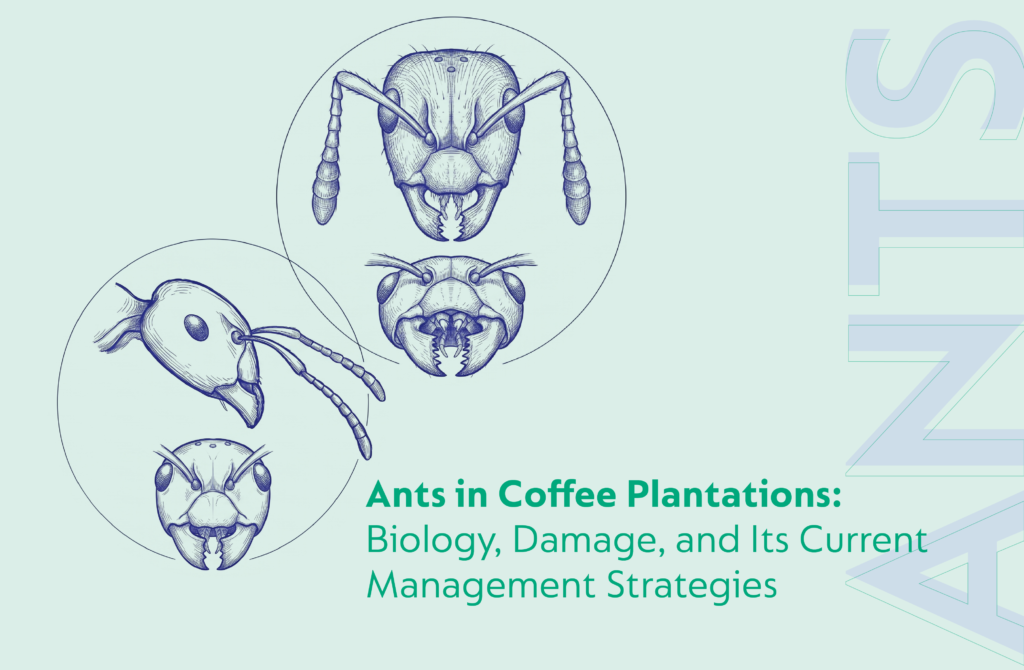
Ants in Coffee Plantations: Biology, Damage, and Its Current Management Strategies (357)
Current Status
Not Enrolled
Enroll in this course to get access
Price
Closed
Get Started
This course is currently closed
Welcome. This course is designed for Agronomists and technical advisors, providing a science-based foundation for adopting sustainable, ecology-centered pest management practices that prioritize long-term farm resilience.
As detailed in the State of Art Report for Sustainable Strategies to Control Ants in Coffee Plantation, ants act as complex ecological regulators in coffee systems. Their impact is defined by a critical dual role:
The Beneficial Potential: Diverse native ant communities serve as essential natural enemies, providing highly effective biological control of the Coffee Berry Borer (CBB), with the potential to suppress infestations by 50-80%.
The Adverse Impact: Conversely, specific interactions—such as the mutualism between ants and honeydew-producing Hemiptera (mealybugs and scales)—can exacerbate sap-sucking pest outbreaks. Furthermore, invasive species such as Solenopsis invicta and Wasmannia auropunctata disrupt farm operations, pose health risks to workers, and compete with beneficial predators.
The core challenge for management is to move beyond “kill-on-sight” tactics and adopt a nuanced strategy that balances these interactions to maintain ecological stability within regenerative agriculture systems.
Effective management requires a dual strategy to transition toward regenerative systems:
Suppress: Actively reduce invasive and harmful ant populations using targeted chemical, biological, and cultural tools. Evidence indicates that integrating biological control—including the use of the entomopathogenic fungus Beauveria bassiana Bb04—with a single low-dose fipronil application can achieve and maintain 95% suppression of invasive ant colonies for long periods.
Promote: Foster diverse native ant communities that naturally regulate CBB and contribute to the overall ecological resilience of the farm.
By integrating shade management, selective chemical use, biological control agents, and advanced monitoring technologies, we can reduce dependency on broad-spectrum pesticides, enhance natural pest regulation, and ensure long-term ecological and economic stability.
By completing this course, you will be able to:
Identify and Monitor: Utilize modern, non-destructive monitoring techniques, including AI-assisted surveillance and volumetric assessment, to make data-driven decisions.
Implement Targeted Control: Apply strategies that combine biological agents—such as the fungus Beauveria bassiana Bb04—with selective chemical treatments to manage invasive colonies while minimizing non-target impacts.
Design Sustainable Plans: Develop site-specific action plans that prioritize the ecological conservation of beneficial ants.
Through this training, you will gain the expertise to turn potential ant-related threats into an asset for sustainable coffee production.
Important: This course includes mandatory interactive activities. You must review 100% of the available resources and content for the system to mark the course as completed.